This page covers the roof edge: soffit, fascia and eavestroughs (gutters). For the walls themselves, start with vinyl siding or the siding comparison on the home page.
What each part does
- Soffit is the underside of the roof overhang. Vented soffit has small perforations that let outside air into the attic.
- Fascia is the board along the edge of the roof, where the eavestroughs hang. Wood fascia is usually wrapped or capped in prefinished aluminum so it never needs paint.
- Eavestroughs (gutters) catch water off the roof and send it down the downspouts and away from the house.
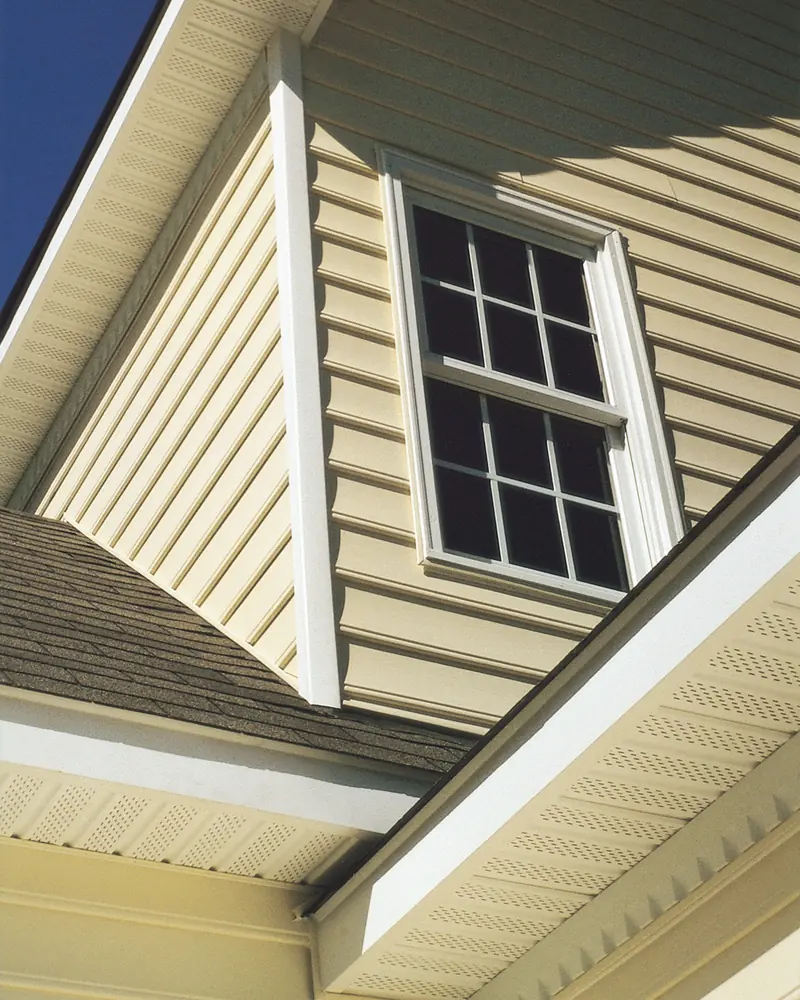
Vented soffit and your attic
An attic needs air moving through it: in at the soffit, out at roof vents or a ridge vent. That airflow carries off moisture that rises from the house and keeps the roof deck closer to outdoor temperature.
In a Moncton winter, that matters. When warm air from the house leaks into the attic and heats the roof, snow melts on top and refreezes at the cold eave, building ice dams that back water under the shingles. Ice dams come mostly from heat escaping through the ceiling, so air sealing and insulation do the heavy lifting, but blocked or solid soffits make things worse. A soffit job should include checking that insulation isn’t stuffed against the vents, and adding baffles where it is.
Fascia: capping the wood
Most houses here have wood fascia boards behind the eavestroughs. Bare or painted, they rot where water backs up behind the gutter. Capping them in bent aluminum, after any rotten sections are replaced, ends the painting and protects the wood. The capping is bent on site to fit your fascia exactly.
New siding coming? Do the roof edge at the same time.
Call (506) 405-9905Eavestroughs
Seamless aluminum
Seamless troughs are formed on site from a coil of aluminum, so each run is one piece from corner to corner. Fewer joints means fewer leaks.
Sized and sloped right
Troughs need enough slope toward the downspouts to drain, and enough downspouts to handle the roof area above them. Undersized or flat troughs overflow in a heavy rain and dump water down the siding.
Hangers for snow and ice
Hidden hangers screwed into the fascia at close spacing hold up far better under snow and ice than old spikes and ferrules.
Water away from the foundation
Downspouts should discharge well away from the house with extensions or splash pads, not at the foundation wall.
Why do it with your siding
- The top course of siding tucks under the soffit and its trim, so replacing them together gives a cleaner finish.
- One trim colour for soffit, fascia, corners and windows ties the house together.
- The staging and ladders are already up, which saves labour.
- Good eavestroughs protect the new siding from water sheeting off the roof.
Signs it’s time
- Paint peeling or wood soft at the fascia, or birds and squirrels getting in at the soffit.
- Eavestroughs sagging, leaking at joints, or overflowing in heavy rain.
- Ice dams or long icicles along the eaves every winter.
- Stains on the siding under the roof edge.