This page covers fibre cement siding, including James Hardie and similar brands. For the painted-wood look in a lighter board, see engineered wood siding. For the cheapest low-upkeep option, see vinyl siding.
What fibre cement is
Fibre cement is made from cement, sand and cellulose (wood) fibres, pressed into planks, panels, shingles and trim. It’s the heaviest common siding, several times the weight of vinyl, and it feels like it: rigid, solid, and quiet in the wind.
James Hardie is the brand most people know, which is why you’ll hear it called “Hardie board”. Other makers sell similar products. Boards come primed for painting on site or with a baked-on factory finish.
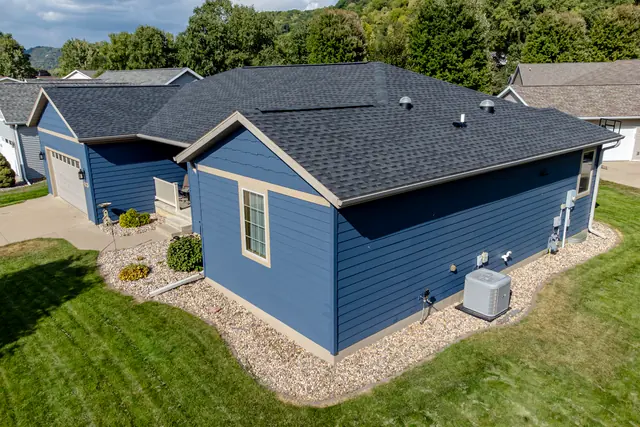
Why people choose it
- Fire resistance. HomeStars singles out fibre cement for fire resistance and strength. It won’t melt like vinyl when a barbecue or a neighbour’s fire is too close.
- Freeze and thaw. RenoQuotes rates it the best of the common sidings in freeze-thaw conditions, because it doesn’t swell when it takes on moisture the way wood products can.
- Rot and insects. There’s nothing for rot or carpenter ants to eat.
- Looks. Sharp, straight shadow lines, smooth or grained faces, and colours that can be repainted any time.
- Life. HomeStars gives up to 40 years with proper care.
What to know before choosing it
Fibre cement costs more than vinyl, and it takes more labour. The boards are heavy, they have to be handled carefully so they don’t snap, and cutting them makes fine silica dust. Crews cut with dust-collecting saws or shears, outdoors, and wear proper protection.
It also needs paint. A factory finish lasts many years, but it will fade and need repainting eventually. That’s still far less upkeep than wood clapboard.
Want to see what fibre cement would cost on your house?
Call (506) 405-9905Installing it so it lasts
Clearance and flashing
Like any siding made with wood fibre, fibre cement needs clearance above the ground, decks and lower roofs, and flashing behind butt joints. In Moncton, that clearance also keeps the bottom courses out of snowbanks and spring meltwater.
A drainage gap
We recommend strapping over the house wrap to create a rainscreen gap. Water that gets behind the siding drains out, and the wall dries between storms.
Fastening for the wind
Boards are blind-nailed or face-nailed as the maker specifies, into studs or sheathing that can hold them. Because the boards are heavy and rigid, fibre cement holds well against wind once it’s fastened right.
Sealed cut ends and touch-ups
Field cuts get sealed or painted, and nail heads and scrapes are touched up before the crew leaves.
Fibre cement in Greater Moncton
Fibre cement makes the most sense on houses you plan to keep a long time, and where looks matter: a front elevation in Dieppe or Moncton you want to stand out, a modern build with large panels and reveals, or a heritage-style house where a smooth lap board can stand in for old clapboard.
It’s also a good choice on the coast. Unlike aluminum, there’s nothing on the face of the wall for salt air to corrode, so it’s worth comparing with vinyl and cedar shingles for houses near the water in Shediac and Cap-Pelé.
What it costs
Price guides disagree a lot on fibre cement. HomeStars' Canadian guide lists $8.40 to $15.00 per square foot installed. RenoQuotes' 2026 guide gives $12 to $18 in its comparison table but $35 to $40 for high-end brands such as James Hardie in its text. The spread is real: board size, factory finish, trim details and the house all move the price. A measured visit gets you a written number for yours. The cost guide explains what goes into it.